
Opening hours: 10am–6pm

A learning resource and meeting place for sustainable community development.
Universeum is Sweden's national science centre, with the mission to strengthen people's scientific capital and commitment to STEM (Science, Engineering, Technology, Mathematics). We do this with experience-based learning in learning environments and programs that arouse curiosity and interest. We also conduct research on learning in STEM and work to preserve endangered species and habitats. In this way, we contribute to sustainable social development – to equal access to science, completed studies, skills supply in STEM and action competence for a sustainable future.
Universeum is a unifying force and arena for academia, the public sector, business and other actors when Sweden is to meet the need for competence and innovation in STEM.
Every year we meet over half a million people, at Universeum and out in the community. As one of Sweden's ten most visited attractions and an established learning resource for the education sector, we play an important role in the development of society. With science as a foundation, proven pedagogy as a method and measurable results as evidence, we are part of the change Sweden needs.
Statistics we want to change.

In the spring of 2025, almost two out of ten ninth graders – almost 19,700 students – did not qualify for any of the upper secondary school's national programmes. 1

More than six out of ten companies state that it has become more difficult to get hold of the right skills. At the same time, 60 percent of companies state that they will need to increase the number of employees within the next three years. In smaller engineering companies, the figure is as much as 75 percent. 2

Today, only two out of ten choose science or technology programmes, while the government's national STEM strategy aims for 25 per cent of upper secondary school students to complete these programmes by 2035. The proportion of students in these upper secondary programmes is clearly decreasing throughout Sweden. 3

Almost six out of ten students in year 8 have science teachers who see a need for skills development in the integration of environmental and sustainability issues in science education. In year four, just over half of the pupils have teachers with the same needs. 4

Only four out of ten young people believe that we will solve the climate crisis. 84 percent of adults in Sweden are worried about climate change and 60 percent of children feel climate anxiety. 5

Universeum's mission and activities.
Universeum's mission is to strengthen people's knowledge, creativity, innovative power and critical thinking in STEM. In PISA 2022, the OECD measured creative thinking for the first time, i.e. the ability to generate and evaluate ideas to solve complex problems, including scientific and societal challenges. It is a clear recognition that these capabilities are crucial for the future. In a technology-driven world, people don't just need to understand science and technology – they need to believe that they can make a difference and have the tools to turn knowledge into action.
Universeum builds STEM competence through activities in three areas:
- Experiential learning
-
Together with Universeum, they explore the world through science, technology and mathematics. The exploration is based on experiential learning – a model for how people learn through experience and experience. Knowledge is the result of the combination of perceiving and transforming experiences or experiences.
- Research
-
At Universeum, research is conducted on lifelong learning, science communication and pedagogy in various research projects. Universeum is unique in several respects. Partly through the combination of learning environments, partly by meeting and being there for a variety of target groups.
- Conservation work
-
Universeum works on several levels to protect biodiversity. Our main contribution is long-term: to increase knowledge and engagement among people, which over time leads to changed attitudes and behaviors. In parallel with the educational work, we participate in coordinated breeding programs that keep viable support populations and support field projects that protect endangered species and habitats.
The year 2025 in numbers.
559,110visits to or meetings with Universeum in total
547,800visits to Universeum at Korsvägen
11,310meetings outside Universeum
52,432school visits at Universeum
2,256teachers in in-service training
720,000unique visitors to universeum.se
53,542followers on social media
Highlights 2025.
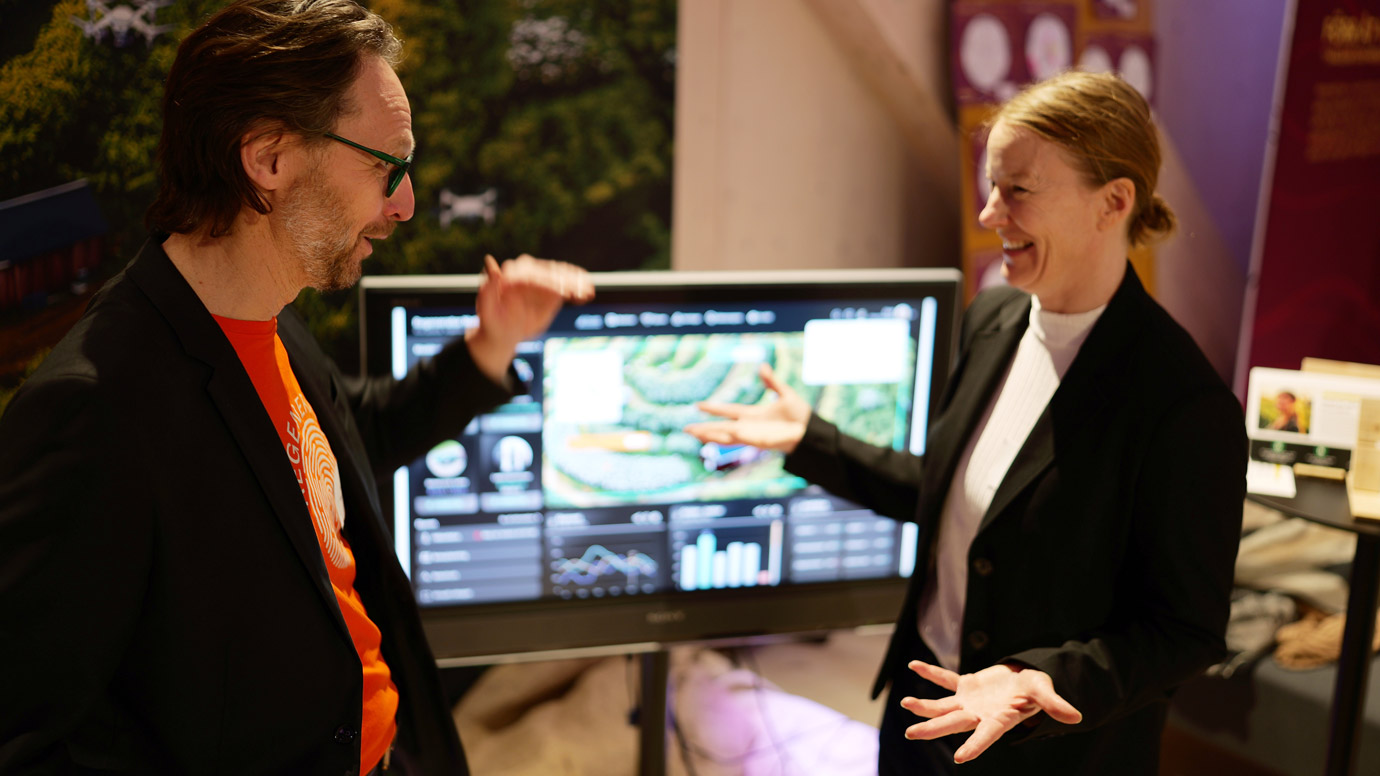
January 31 – Meeting place for future vision
In collaboration with Vinnova, Universeum invited to a vernissage where 28 innovation projects showed their prototypes of the future of food and mobility systems. Young people and adults, academia and business met to experience and discuss possible futures. The meeting place promoted knowledge exchange and collaboration between researchers, companies and civil society, and shortened the distance between research and citizens.
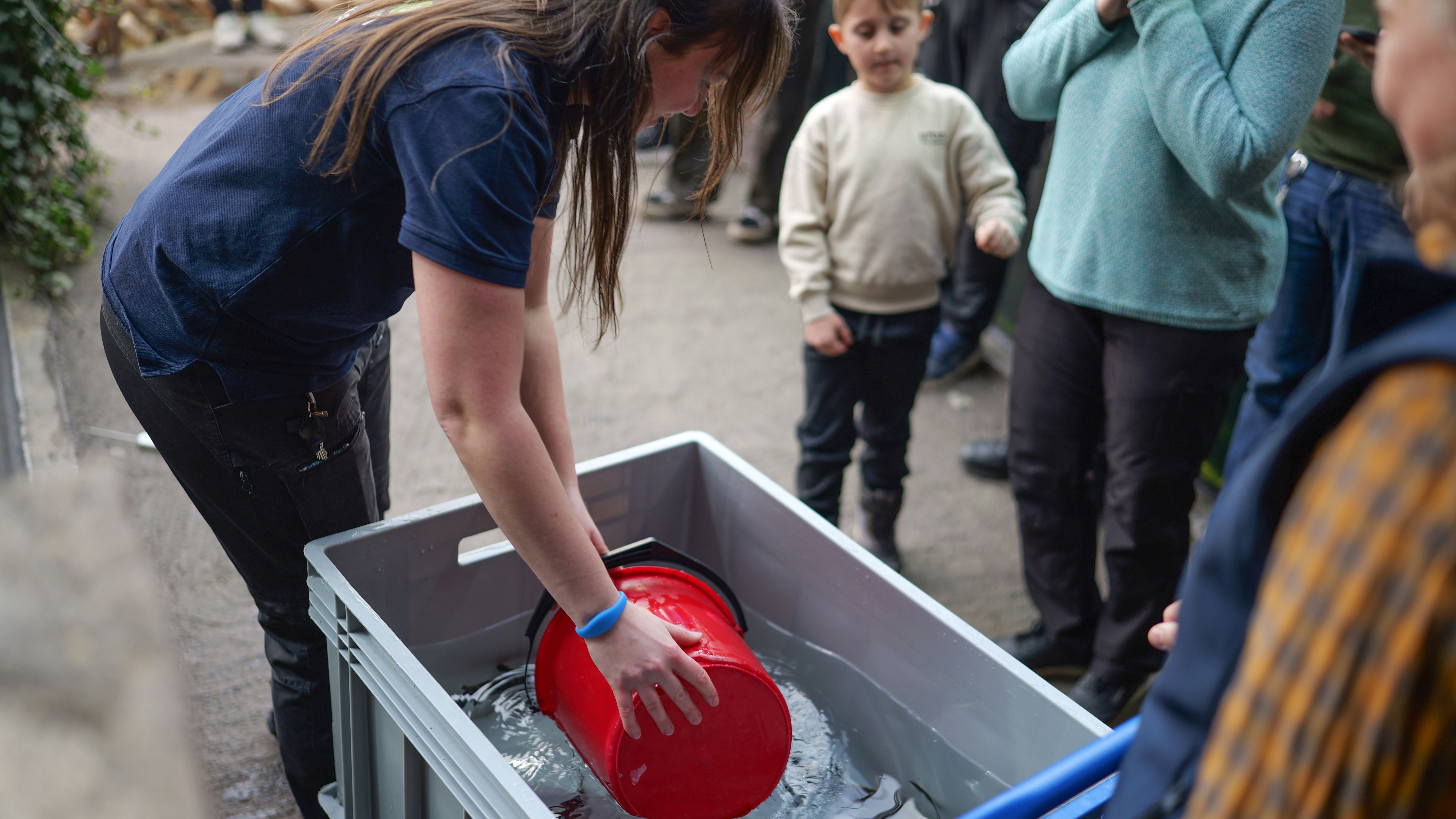
March 17 – The return of the sturgeon
Seven sturgeon got their new home in the Wilderness. They will grow before they are moved to the Göta River for a life in the wild – a concrete contribution to the conservation work for biodiversity. The project, initiated by Sportfiskarna, has the ultimate goal of returning the Atlantic sturgeon to our waterways in Gothenburg.
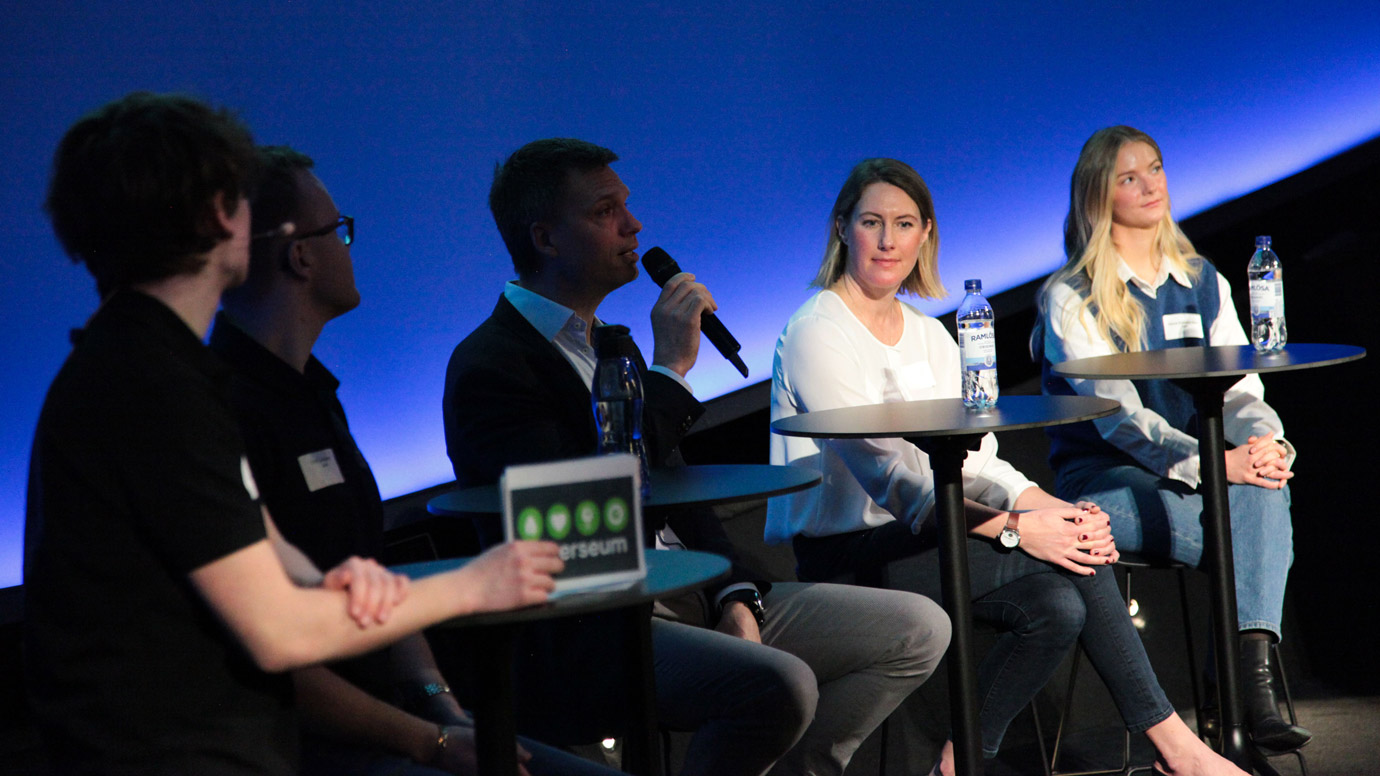
March 19 – Future Forum
For the third year in a row, the Future Forum brought together high school students, academia and the business community. More than 800 students met with representatives from SKF, Saab, Volvo Cars, AstraZeneca, Chalmers University of Technology and the University of Gothenburg for inspiration and guidance for future studies and work in STEM. By linking students directly to future employers and educations, the Future Forum makes a concrete contribution to Sweden's skills supply.
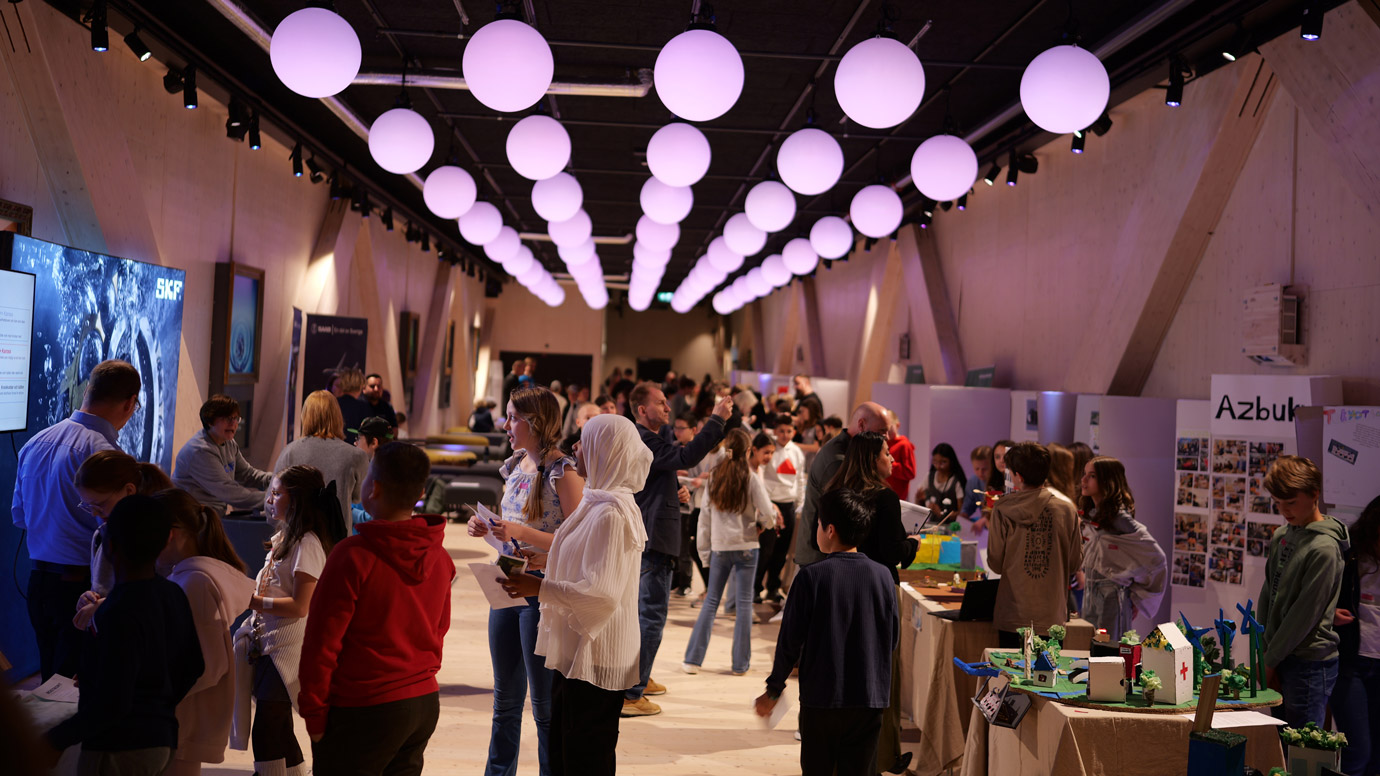
9 April – The Innovation Challenge
300 fifth graders presented their solutions for the sustainable cities of the future. In collaboration with SKF, Saab and Volvo Cars, the students developed ideas about energy-efficient, circular and safe cities – a powerful way to build both STEM interest and action skills for sustainable development in children at the age when their interest in technology can begin to decline.
April 29 – Visit by school counsellors
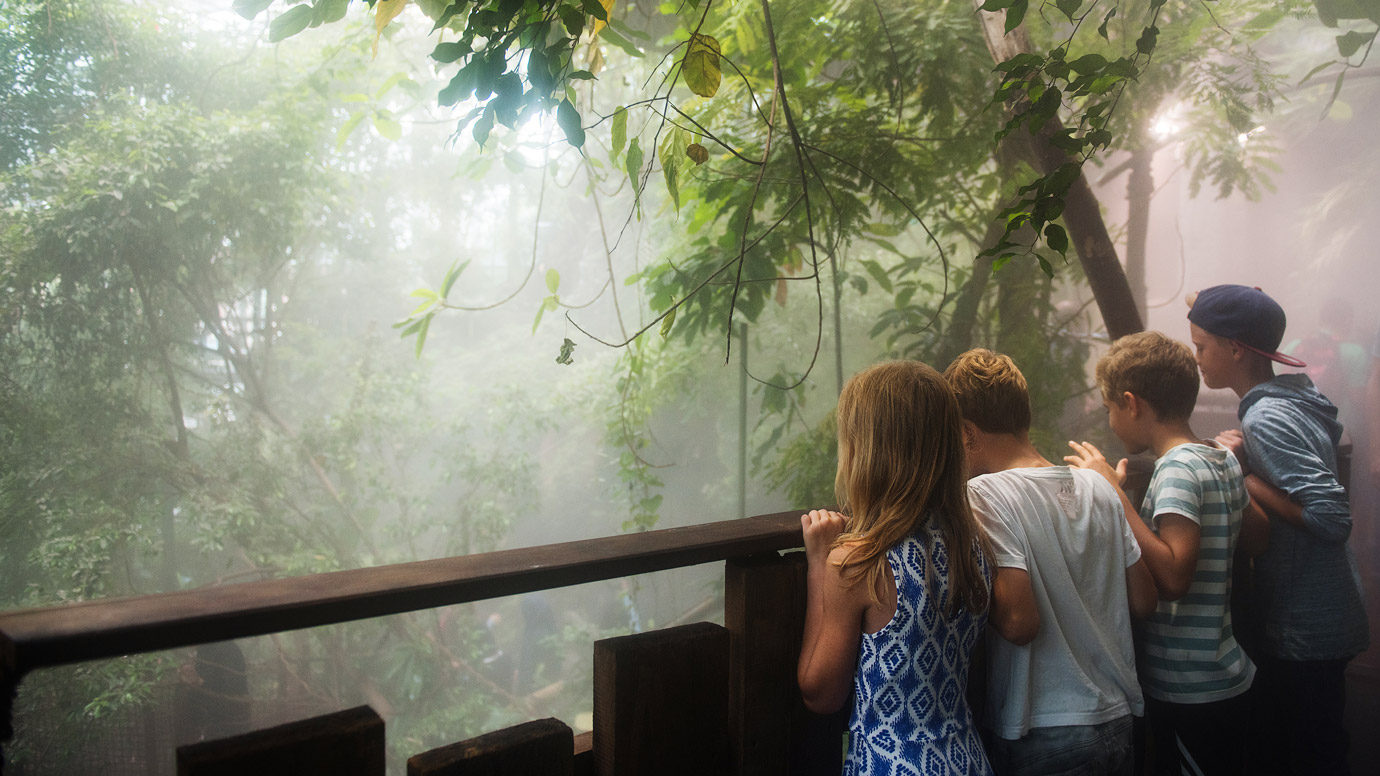
65 school counsellors from Gothenburg's primary schools spent a morning at Universeum focusing on sustainable development and eco-feelings. Together, we explored how student health can meet children and young people in their thoughts and questions about the future – with knowledge, presence and the courage not to have all the answers. A reminder that sustainability work is also a work of care, and that all adults around the children matter.
24 April – Awarded Ecsite 2026
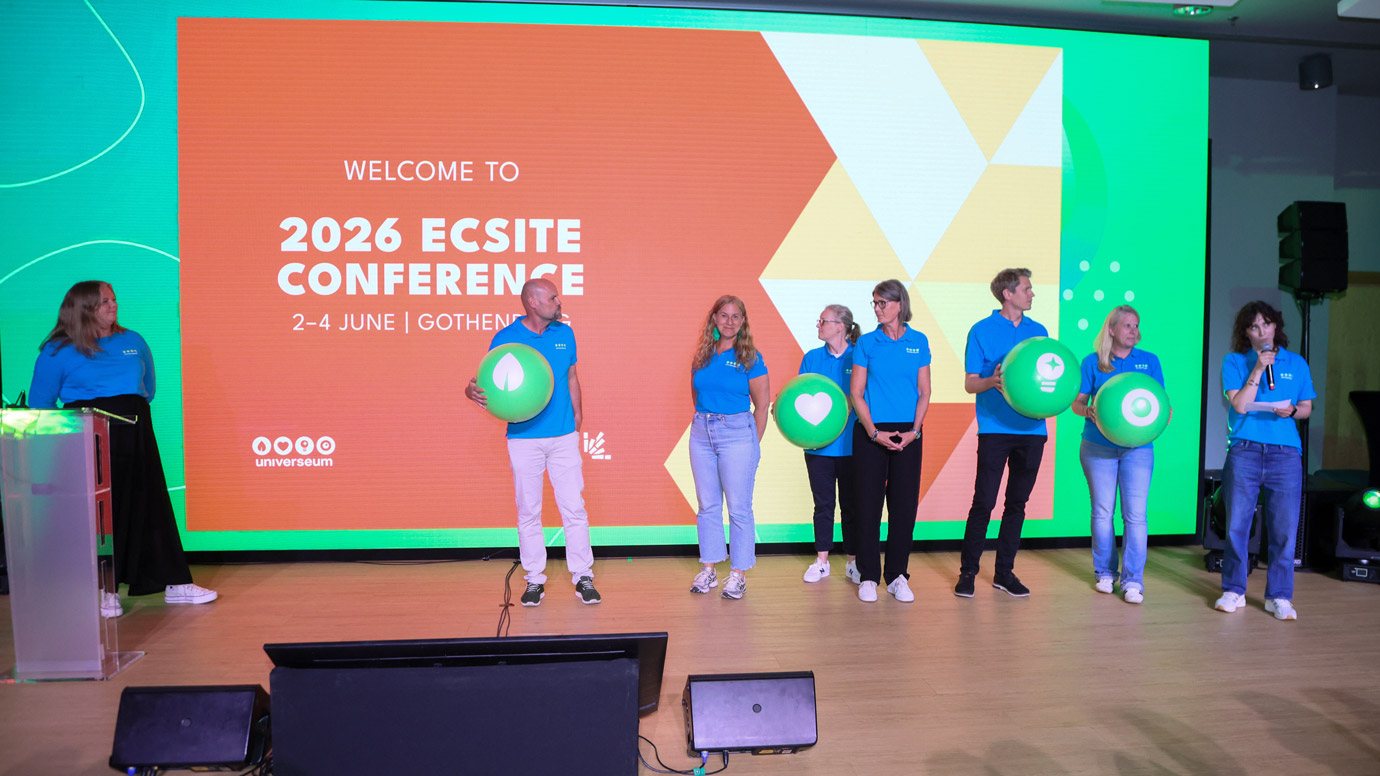
Universeum has the honour of hosting Ecsite's annual conference for the second time. Ecsite brings together over 300 organizations dedicated to inspiring and engaging people in science. The fact that the conference in 2026, like in 2013, will be held at Universeum gives us a unique platform to show the importance of science centers for STEM learning, just as Sweden is implementing its national STEM strategy. The conference also strengthens our connections with the surrounding community and shows how collaboration drives change.
June 10 – Universeum on TV4 Nyhetsmorgon
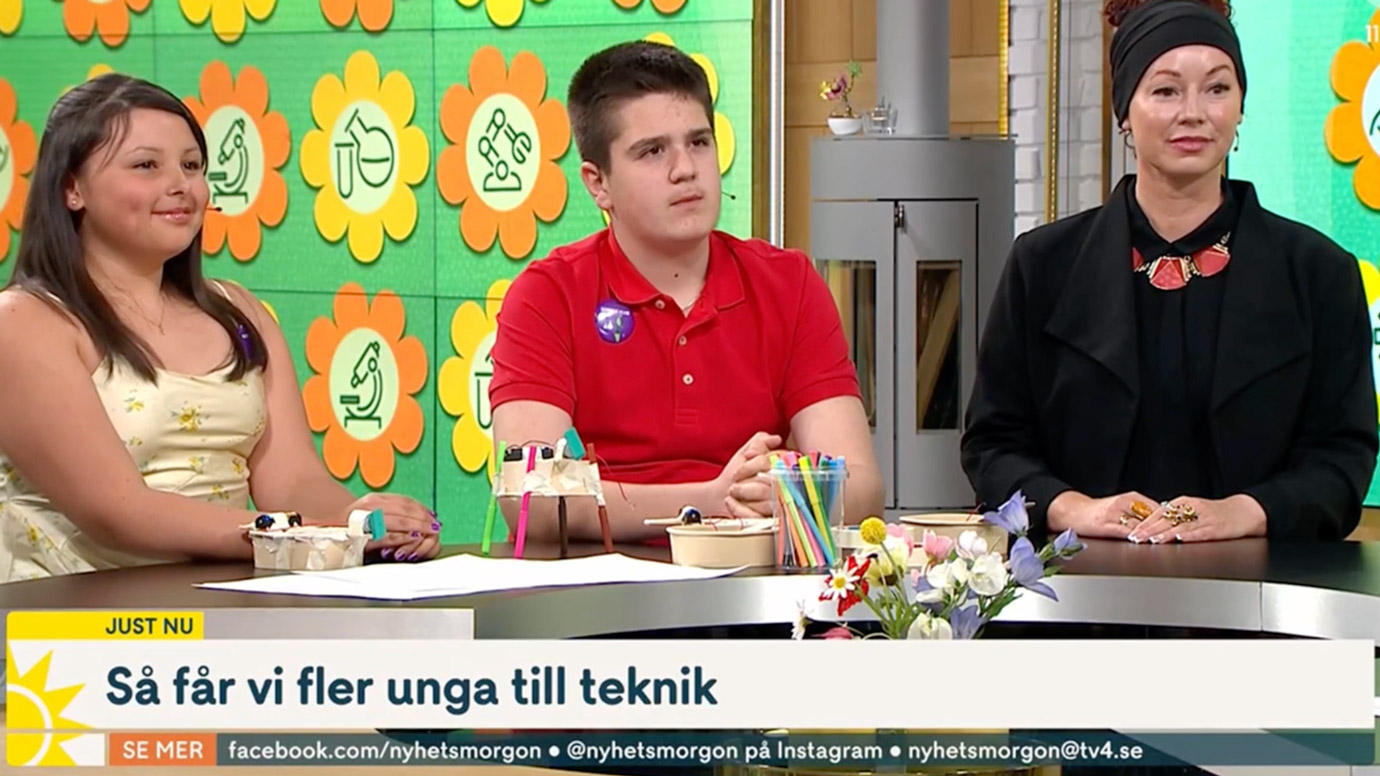
Ulrika Sultan, doctor of technology education, spoke on TV4 Nyhetsmorgon about the importance of taking care of young people's interest in technology, while Cassandra and Filip from Universeum Science Club talked about their experiences and thoughts about STEM. The message reached all of Sweden: To solve society's major challenges, more people need to want to work with technology – but interest decreases with age, especially among girls. Sweden must build efforts on facts, not prejudices. An important contribution to the public debate on skills supply and inclusion.
June 24 – Universeum in Almedalen
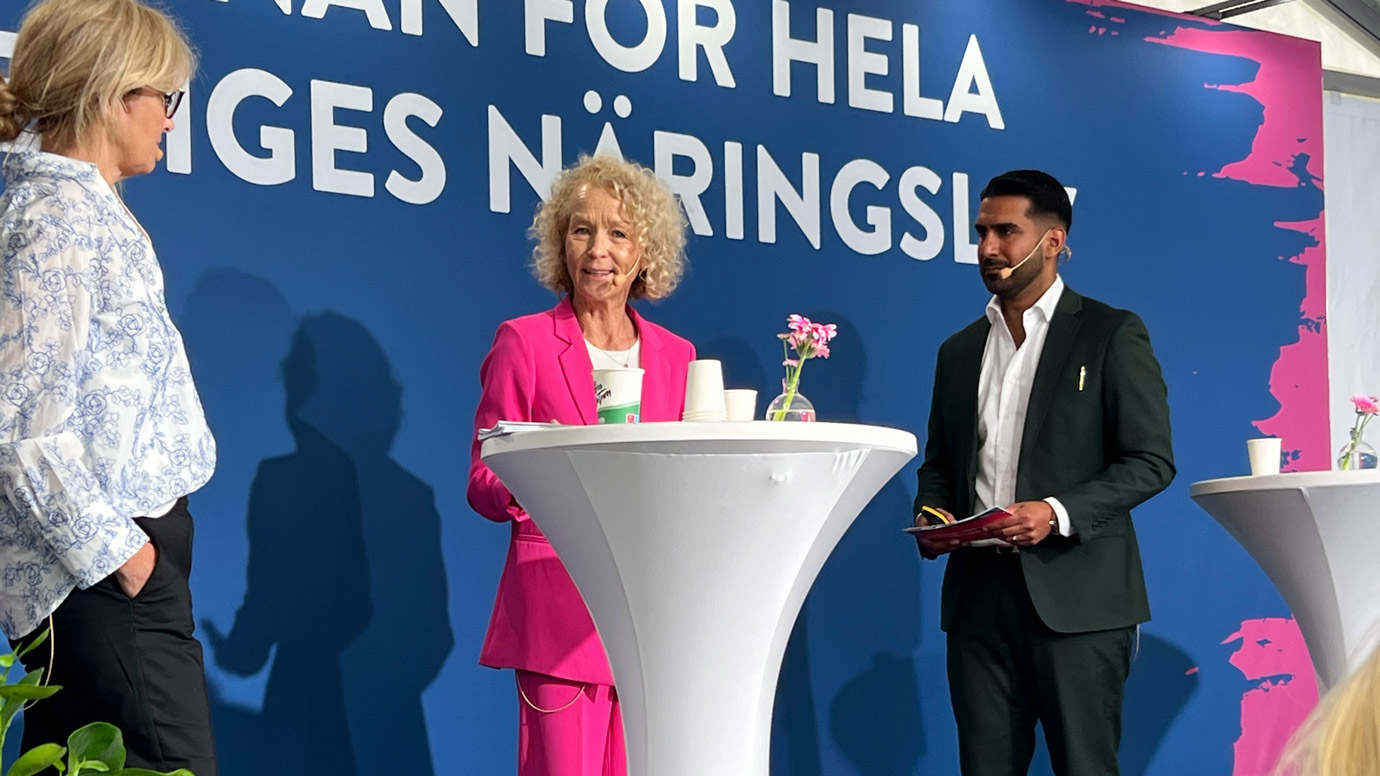
In panel discussions, seminars and meetings in Almedalen, Universeum highlighted two clear needs: More collaboration between academia, business and civil society to solve the skills needs of the future, in line with the government's STEM strategy. And pooled resources in large and powerful investments that with perseverance can have an effect at the system level. Through its presence in Almedalen, Universeum contributed to policy influence and positioned itself in the national STEM debate.
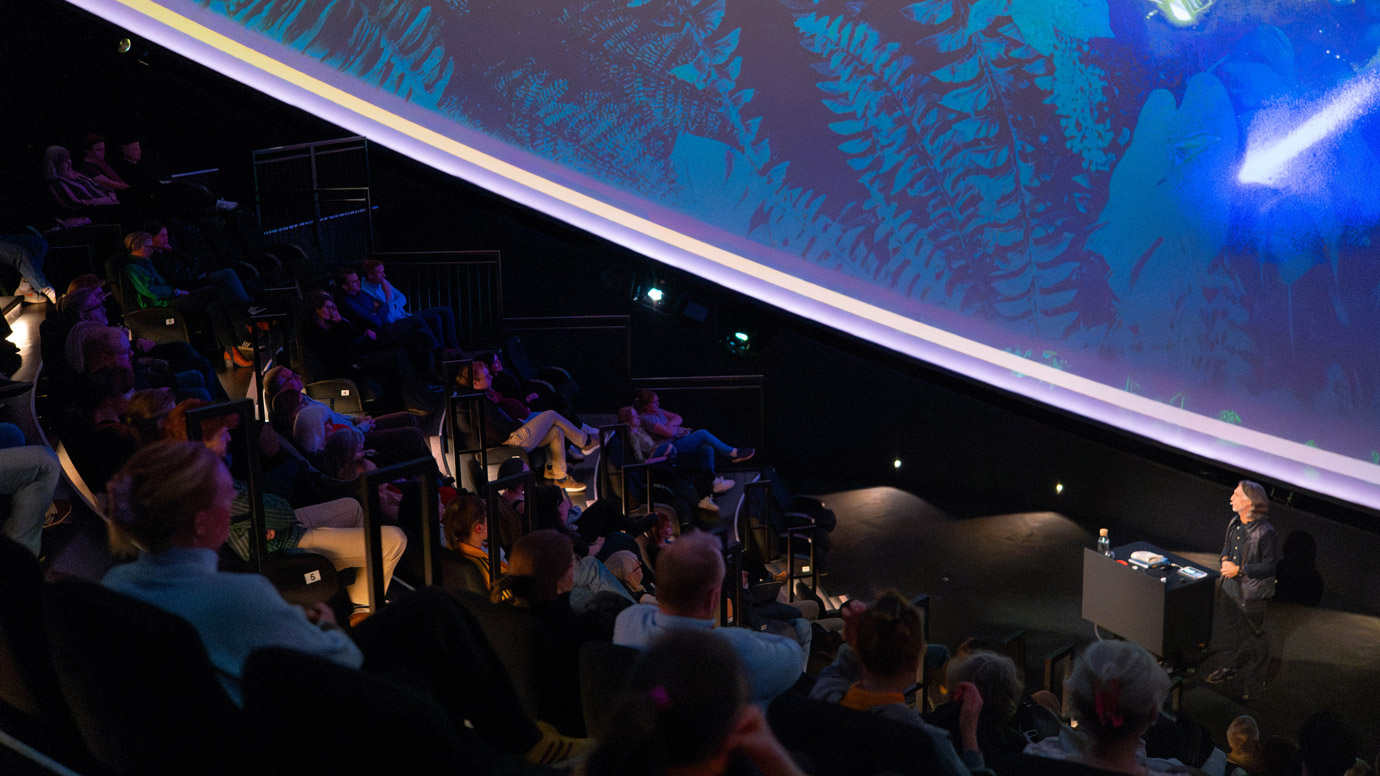
September 4 – Premiere of Universeum After Dark
A new concept where curious adults get the house to themselves one evening a month. With an 18-year age limit, inspiring talks and live music, we create an arena for lifelong learning and critical thinking. The first evening explored the science behind bubbles with Lisa Lemke and Thaher Pelaseyed. In the autumn of 2025, the evenings followed Enthusiasts and Hormone Haggor, Power up for the planet, and Femmes for the future. A total of 1,909 adults experienced Universeum After Dark.
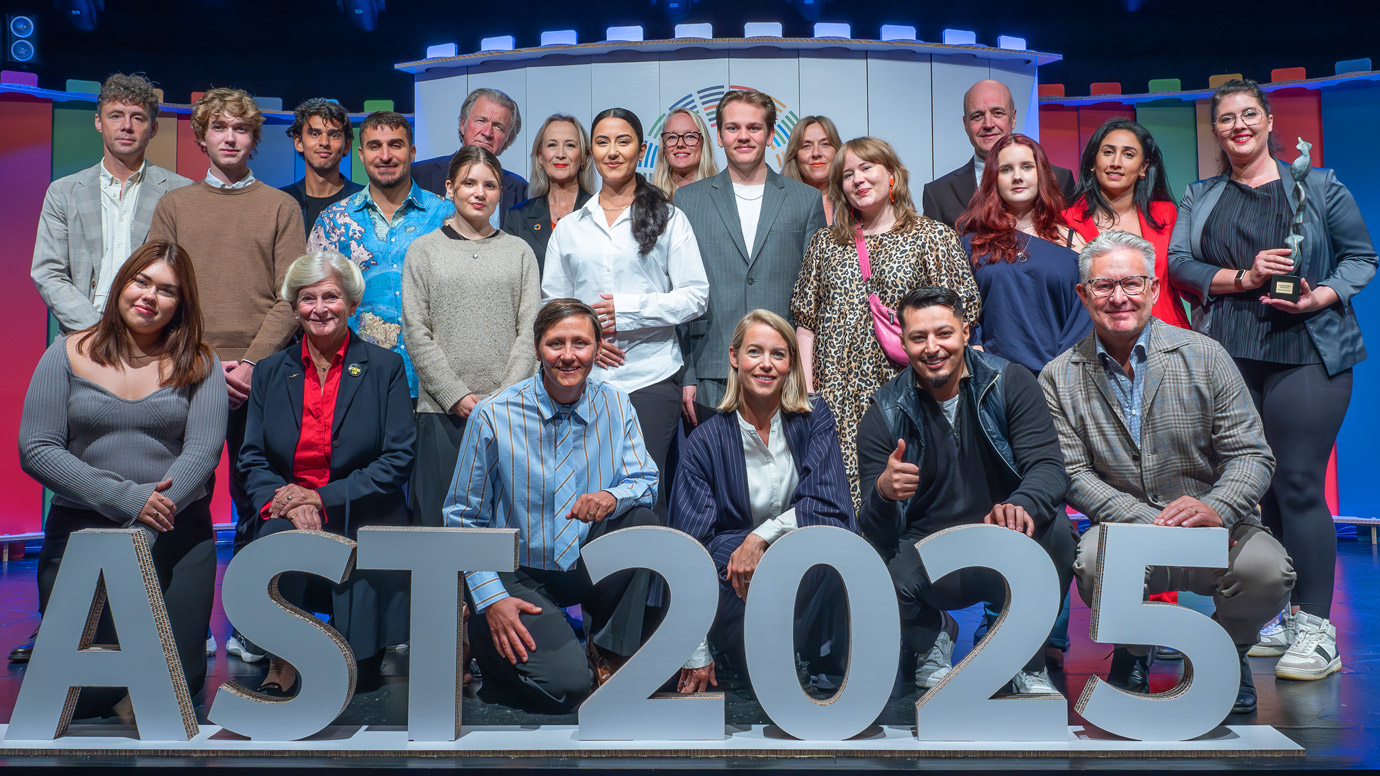
September 11 – A Sustainable Tomorrow
The digital event combined digital lectures with programs in Wisdome. Fredrik Reinfeldt, Sara Wimmercranz and Universeum's CEO Carina Halvord were some of the speakers. Universeum was one of the arenas for the meeting between decision-makers, researchers and the business community – the conversations needed to drive sustainable transition.
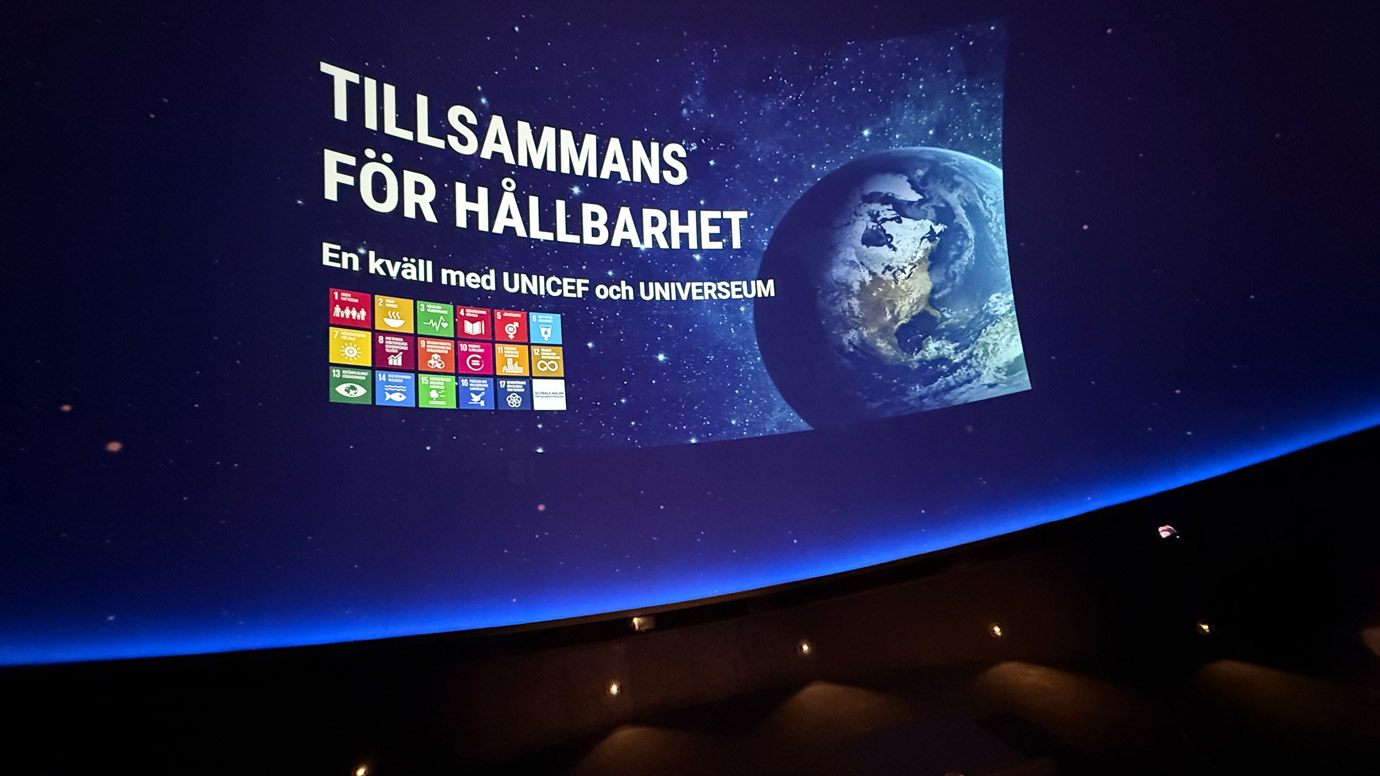
October 14 – Preschool Teacher Night
Together with UNICEF, Universeum invited about 80 preschool educators to a theme evening on preschool's sustainability work. Through workshops on learning for sustainability in Universeum's learning environments and a tour of Wisdome, the educators' competence to work with sustainable development was strengthened already in preschool.
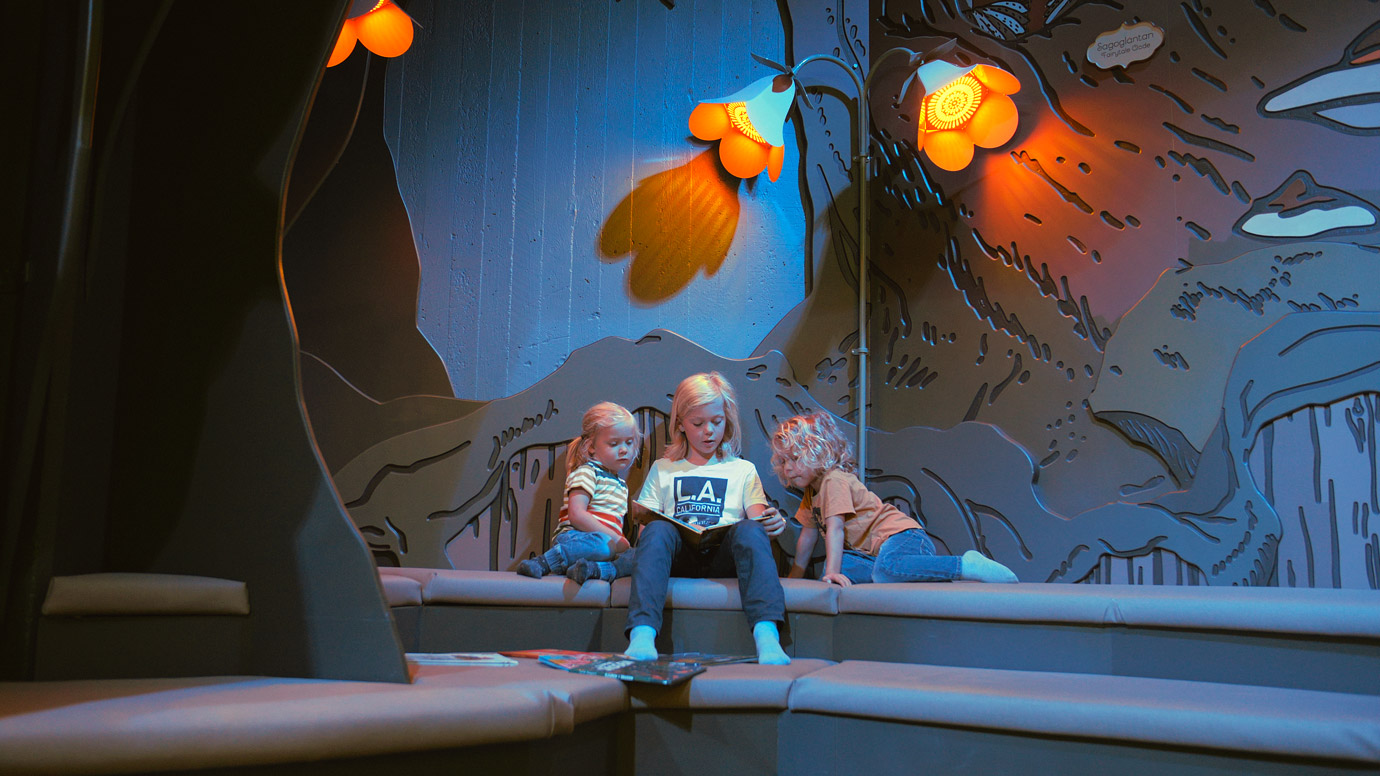
October 15 – Launch: Building bridges between preschool, home and science
With support from the MOE Foundation, Universeum launched a four-year initiative that addresses a central challenge: Early interventions in STEM have the greatest effect, but not all children get the same opportunities. Children's scientific capital is formed early on and affects their entire future educational journey. The initiative will lead to methods and programmes that reach children where they are – in preschool and at home. A concrete investment in social inclusion and equal access to science from the start.
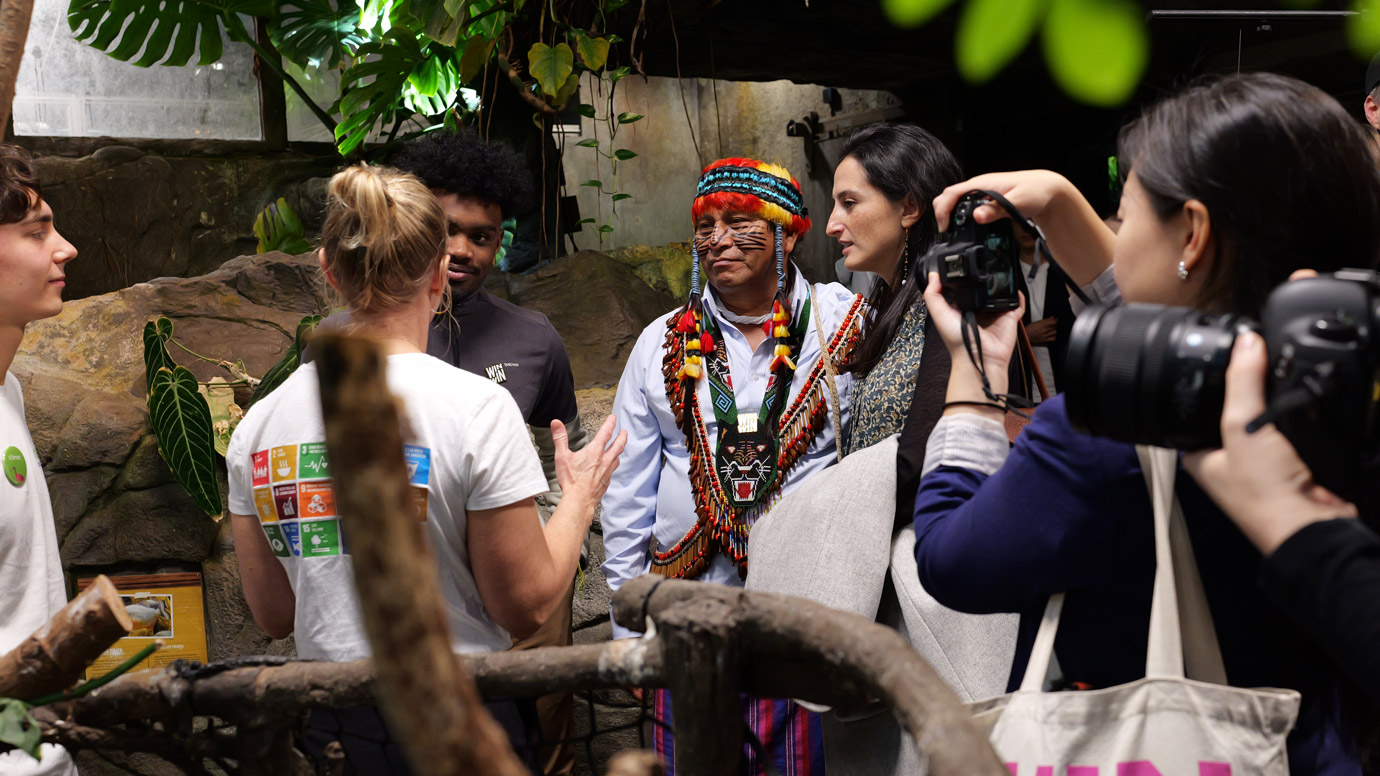
October 17 – WIN WIN Gothenburg Sustainability Award
Universeum hosted A journey with environmental defenders – a theme day that brought together indigenous leaders, climate experts and activists for conversations about how we protect the rights of indigenous peoples, environmental defenders and young people at a time when democracy has limited room for manoeuvre. The day ended in a packed Wisdome with live guided tours in space and lectures on environmental activism. By being an arena for this global sustainability debate, Universeum contributed to dialogue on democracy, rights and environmental defence, as part of the WIN WIN Gothenburg Sustainability Award.
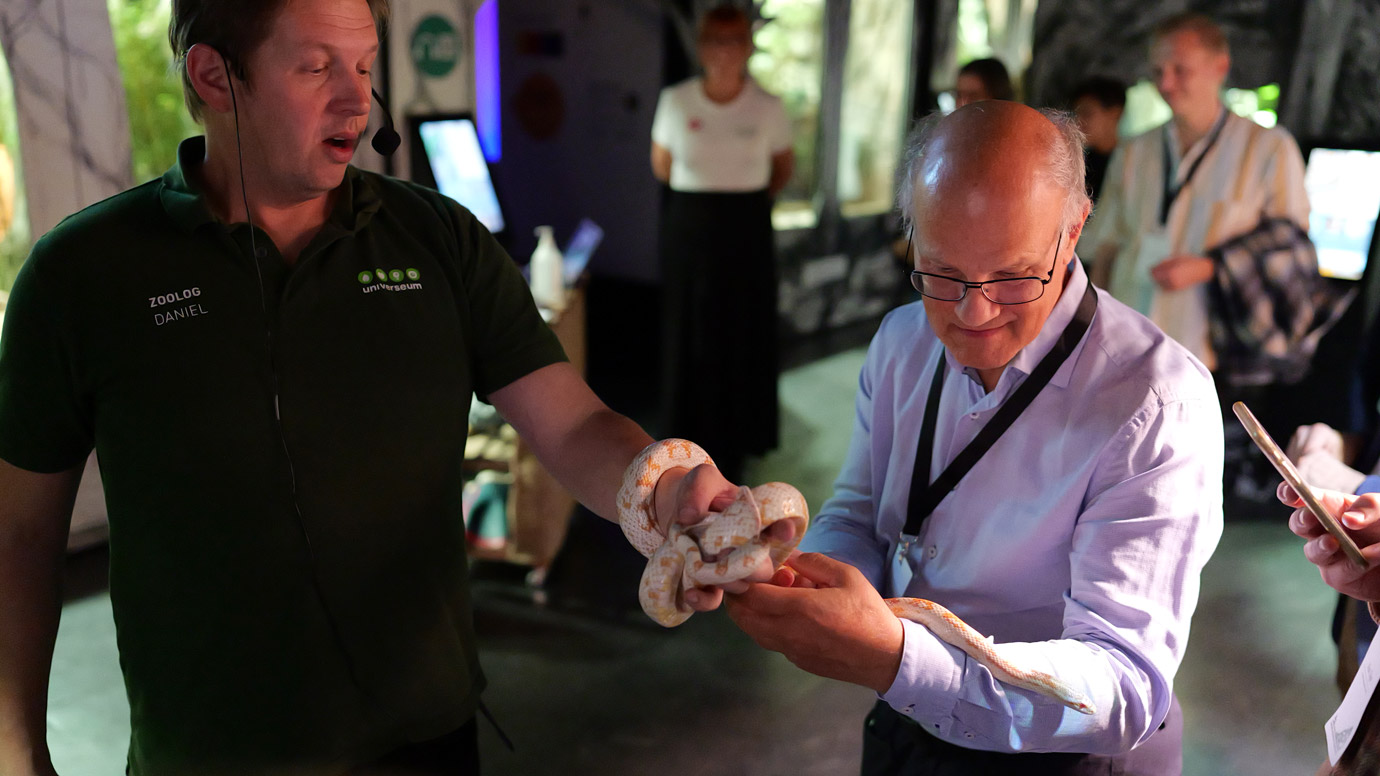
October 22 – Swedish Biodiversity Symposium
Sweden's largest interdisciplinary conference for researchers, experts and stakeholders in biodiversity had a programme item at Universeum. The participants explored our learning environments and took part in the experience-based pedagogy we use to create awareness and commitment to biodiversity. An important opportunity to make our conservation work and educational methods visible to the country's foremost experts in the field.
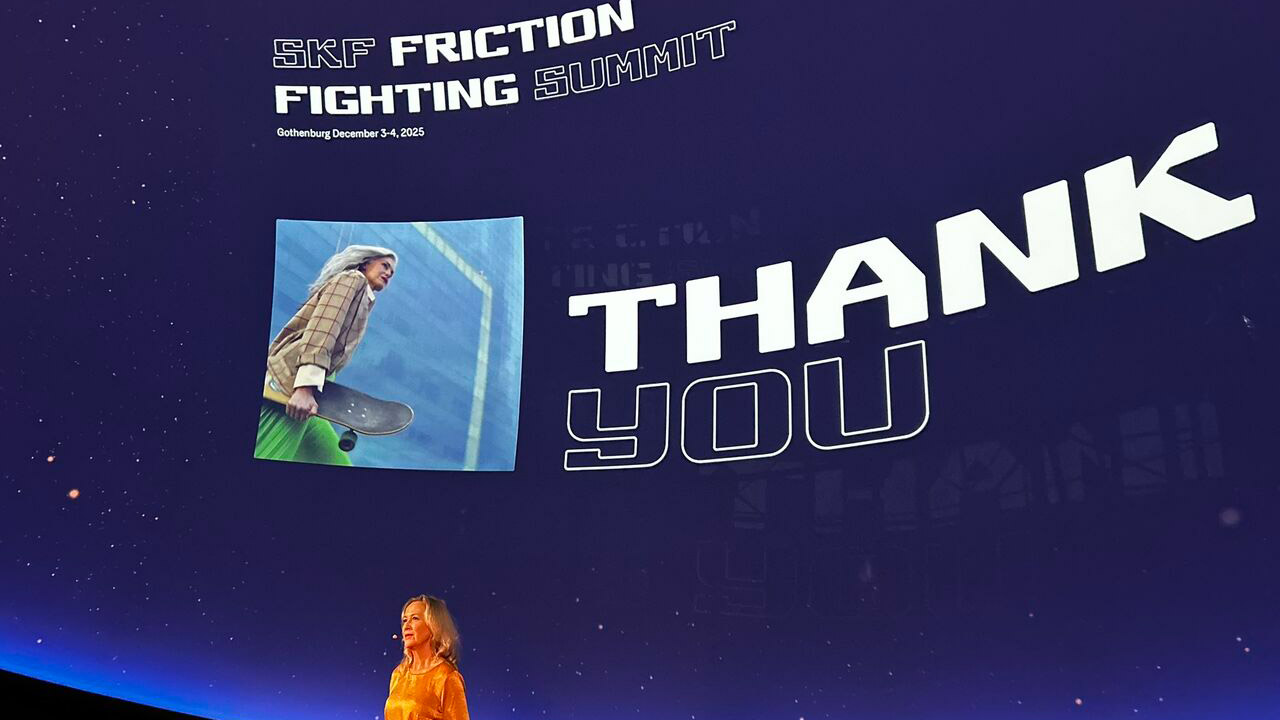
December 5-6 – Friction Fighting Summit
SKF gathered Nordic industry leaders, decision-makers and representatives from academia and the financial sector in Gothenburg for the first edition of the Friction Fighting Summit. The second day took place at Universeum with a focus on the overarching question: How do we work together to accelerate the transition to a sustainable industry? In line with Universeum's mission, we became an arena for precisely the collaboration between academia, business and society that is required to meet the challenges of the future.

Can we measure our societal impact?
How do you measure curiosity? How do you capture the moment when someone decides that STEM is "for me"? How do you value shared experiences and memories during a visit with family or friends, or the action skills that emerge after several meetings during a longer learning process?
Measuring societal impact is complex. Many of the impacts our operations generate are difficult to capture – and some simply cannot be measured in traditional ways. How do we know what is due to the meeting with Universeum compared to everything else in a person's life? Learning is a complex, long-term process in which individual experiences interact over time.
The time perspective complicates further. Many of the effects we value most only become apparent much later: changed attitudes, increased willingness or ability to complete one's studies, new career choices, lifelong commitment to sustainable development.
In this report, we present our societal impact with humility in the face of what we cannot prove in evidence, but also with pride in what we actually know about our contribution to society and its development.
Result: Increased scientific capital in each individual.
The experience-based learning that takes place at and with Universeum, together with the research and conservation work that we conduct, aims to increase people's scientific capital. The term is used to describe the accumulated resources an individual has in STEM. Scientific capital includes not only the actual knowledge of the subjects, but also how the person thinks and what attitude they have towards STEM, what role models and social networks the person has related to the field and what activities they engage in.
The likelihood that an individual will become engaged and choose studies and work in STEM has a strong correlation with the size of the individual's scientific capital. Research from King's College London shows that the more scientific capital a young person has, the more likely they are to continue with science. 6
Experiences that make a difference.
Lena Pareto, Professor of Education at the Department of Education, Communication and Learning at the University of Gothenburg with applied research at Universeum, conducts research on lifelong informal learning. Her research is about understanding the mechanisms of informal, experience-based and lifelong learning that are at the core of Universeum's activities, and in what ways and why it contributes to raising knowledge about and interest in science and technology in society.
The research identifies whether and how individuals change their approach to science by analyzing how they talk about scientific phenomena. This has led to a didactic model that explains how experiential learning at science centers works. The model also provides a way to assess the long-term impact of activities based on quality, participants and level of engagement.
The research results confirm that Universeum's experience-based pedagogy works and creates a lasting effect:
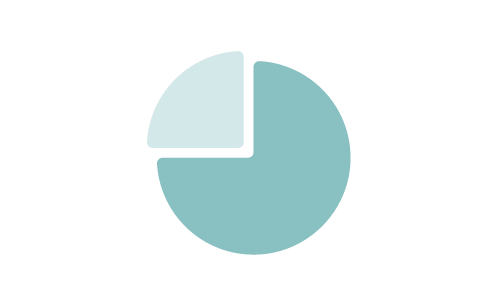
70-75% of visitor interaction consists of productive knowledge conversations
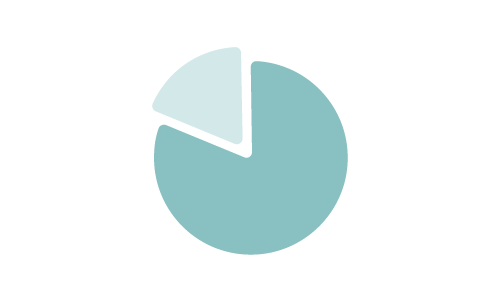
5.7 out of 7 is the visitors' rating of learning in Wisdome
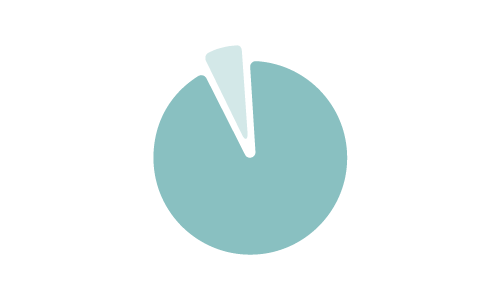
92% of participants in programs show high interest

Impact: long-term effects at the societal level.
In 2025, we created change. The numbers speak for themselves. At the same time, the numbers are just the beginning. What really counts in the long term is the fifth grader who suddenly wants to become an engineer, the high school student who dares to apply to Chalmers, the family who has never talked about biodiversity at home before.
Here is our impact in five areas where Sweden needs change.
1. Social inclusion and equitable access to science.
All children deserve to face science. But the reality is unfair. Children from academic homes have more role models, greater access to activities and a stronger belief that "science is for me". We are working to change that.

Universeum Science Club where the needs are greatest.
We are moving the business out. During the year, our Universeum Science Club method created 9,540 meetings with children, young people and adults. Through hands-on activities, they get to investigate, experiment and discover how fascinating science and technology can be. Not in our house – out in their schools, cultural centres and residential areas.
In Gothenburg, the collaboration with School as an Arena, the City of Gothenburg's initiative to even out differences in children's growing conditions, is crucial. They know the areas. We have the method. Together, we create meetings with STEM where it does the most good.
"Science Club is experience-based, creates curiosity and commitment in the children and their families. We see that the activities carried out by Universeum are of high quality and they are very popular."
– Anna Grunander, Development Manager at the Primary School Administration and School as an Arena
Iuliana Badica, a doctoral student at the University of Gothenburg, follows the Science Club family. She has observed various activities and interviewed several families. The results are clear: Almost half of the families previously had little experience of science-related activities at home. Now they are participating. Now they are experimenting. Now the children talk about science at home.
"It's been great fun. Especially building robots and being able to pet a cockroach. I love Science club!! ”
– Participants, Science Club Leisure
"Absolutely fantastic experience for everyone and we learned a lot. It was an adventure, too bad it was only four times."
– Family, Science Club Family

Tickets for those who need it.
We donate tickets to organizations that work with families in vulnerable situations. In 2025, we gave 900 tickets to two organizations: Gothenburg City Mission and the Queen Silvia Children's Hospital Fundraising Foundation. We are there for everyone, but not everyone has the conditions to visit us without a little help along the way, which is why we work with organizations that know where the tickets are most useful.
"The tickets that Universeum donates to Gothenburg City Mission mean a lot to the families who take part in them. The visits are something they would not be able to do otherwise due to the financial situation they are in. There is simply no room for activities that cost money. This means that the tickets help children have new experiences, learn new things and that the family can spend time outside the home. Both the children and the parents are often excited and happy after the visits. The children because they have seen exciting animals and learned new things, and the parents because they feel that they have been able to give their children a nice experience together."
– Emma Anderberg, Head of Unit at Gothenburg City Mission
"Thanks to our friends at Universeum, we can offer a little break from life at the hospital when they need it most. The fundraising foundation for Queen Silvia's Children's Hospital is so grateful for the great support we receive from Universeum every year. Sometimes a break from daily life in the hospital is just what you need to get some breathing space. Even if some children are too ill to leave the hospital, siblings and parents can take part in Universeum's magical world for a while and get some joy in an otherwise difficult time."
– Lisa Tisell, Operations Manager at the Fundraising Foundation for Queen Silvia's Children's Hospital

Meaningful leisure time.
An autumn break. Five days. Five different squares in Bergsjön, Hjällbo, Hammarkullen and Biskopsgården. Here, children and families built rockets, explored technology and engineering, and experimented together. Before that, an Easter break and two days in Kulturhuset Bergsjön with STEM activities for children. At the West Sea Week with a pop up in Askimsviken.
We know that it is not enough to have a nice house on Korsvägen, we also have to be where people are. In the immediate area. Where families shop for food and children meet friends. During our holiday activities in 2025, we reached 715 participants in four different districts in Gothenburg.
Gothenburg is really full of geniuses big and small.
Our impact in social inclusion and equitable access to science.

9,540 meetings with children and families through Science Club

760 meetings with children in holiday activities

1,010 meetings with students in the TellUs pilot project

900 donated tickets to two established organizations

Increased geographical presence compared to the previous year
2. Educational attainment.
We build the conditions for students to succeed in school, by strengthening their scientific capital from preschool to upper secondary school. And it starts with the teachers and school staff. When children encounter STEM early and repeatedly in an engaging way, their confidence, curiosity, and perseverance grow. This leads to better study results.

A complementary learning environment throughout schooling.
We meet children and young people of all ages, with programs adapted just for them. Can we show that the students we meet have an increased percentage of passing grades in ninth and upper secondary school? No. But we do know that the mechanisms we activate are exactly the ones that predict success. The connection is clear: early STEM involvement → strengthened identity as "someone who knows science" → increased knowledge and motivation. In 2025, we created learning experiences for 7,340 children in preschool, 39,178 students in primary school through 35 different programs and 925 high school students in Future Forum.

Municipal agreements provide continuity.
Through agreements with five municipalities, we ensure that students can meet Universeum as part of the regular teaching. Not dependent on the parents' initiative or conditions. Not by chance. Systematically. In addition to Universeum visits and programmes for pupils, the municipal agreements cover further training, supervision and process management, tailored to each municipality's needs.
"I would like to highlight some parts of our collaboration that are particularly valuable: supervision of our staff in global issues and sustainable development, involvement of Universeum's educators in parallel with working ourselves at home, and access to the learning environment Universeum. All of this is appreciated by both staff and students, and we see that it has an effect and success."
– Anders Hurtig, Operations Manager Primary School at Lerum Municipality

The teachers' competence is key.
2,256 teachers were developed in 2025, through continuing education and teacher evenings.
Lerum municipality is investing in the ability of after-school centres to teach science and technology during the academic years 24/25 and 25/26. When teachers get better tools, they reach hundreds of students throughout their careers.
"I see inspired after-school teachers and happy children. Universeum's Science Club fits perfectly into our development plan, and now more of our after-school teachers want to take the continuing education."
– Principal, school in Lerum municipality
The same applies to the City of Gothenburg, which is raising the competence of educators through Science Club Fritidshem.
"We meet many educators who experience challenges in approaching the subjects and see a need for increased self-confidence in science, technology and mathematics. Here we show that it does not have to be that difficult or complicated, and the participating educators get several methods and ways of working.
– Torbjörn Blanksvärd, educator at Universeum.
"We have received inspiration for our activities. We feel that we can and dare more."
– Work team, after-school care in Gothenburg
Our impact in educational attainment.

52,432 school visits at Universeum

2,256 teachers, educators and school staff trained

5 municipalities with agreements that include continuing education
65 annual passes* in preschools, compulsory schools and upper secondary schools

Increased geographical reach compared to the previous year
* Each annual pass gives all groups of students within a stage or upper secondary school programme free admission during the academic year.

3. STEM Skills supply.
Sweden has problems. Too few young people choose an education in STEM, too few undergo vocational training in STEM and too many new doctoral students leave the country after defending their dissertation. 7 Universeum works on several fronts and in broad collaboration, knowing that interest in STEM is formed early.

Research for scientific inclusion.
Since the autumn of 2025, Ulrika Sultan, Visiting Researcher in Engineering Science at the Department of Science Communication and Learning at Chalmers, conducts applied research at Universeum. A central question in her research is how science centers can contribute to more people feeling at home in a technological world. The goal of the research is to develop new knowledge and concrete methods to make technology education and science communication more inclusive, arouse long-term commitment and broaden the recruitment base for the labour market of the future.
"Chalmers' ambition is to conduct excellent research and education in an inclusive and equal environment. To secure the technical competence of the future, we must work long-term, research-based and in collaboration. This investment is completely in line with that strategy."
– Maria Elmquist, Deputy Vice-Chancellor with responsibility for leadership and equality at Chalmers

Teacher competence development.
2,256 teachers were trained in 2025 in science, technology and sustainable development. A competent teacher influences hundreds of students during their career. That is how system change happens.
"The research is clear: many young people, especially girls, apply for technical education – but too many drop out. That is where we need to put our efforts into action. In everyday life, in the classroom and in the treatment."
– Ulrika Sultan, PhD in Technology Education and Visiting Researcher at Science Communication and Learning at Chalmers

Future forum – before the choice is made.
800 upper secondary school students in year 2 came to the Future Forum 2025. The year before they have to choose a path after high school. They met with Chalmers University of Technology, the University of Gothenburg, SKF, Saab, Volvo Cars and AstraZeneca. Real people. Real jobs. Real answers.
"We're here to look around a bit. It's interesting because when you're in high school, you don't know what you're going to do next, maybe work at Volvo or Saab."
– Jin Saadi, student at Amerikanska gymnasiet
"It can be difficult for you to know what you want to become. It's really nice to get some feedback and a better idea of what to do, when you see others who are already up and running. It's great that we get to come here."
– Hana Abbas, student at Amerikanska gymnasiet
"You get to improve your rhetorical skills by speaking in front of people, it feels like an important thing to learn before working life. And of course, make contacts."
– Simon Frisack, student at Franklin Gymnasium and moderator at Framtidsforum

The right solution in the Innovation Challenge.
Around 300 fifth graders from twelve classes worked on real-world challenges from SKF, Saab and Volvo Cars. Year 5, this is where girls' and boys' interest in technology begins to differ. We catch them right then.
They solved real problems. They saw that their knowledge matters.
"The Innovation Challenge gives teachers opportunities to work with value-creating learning. The assignment and structure pave the way for the students to use their knowledge to create value for stakeholders outside the group, class or school. It becomes important and real."
– Andreas Tärnvind, educator at Universeum
"We see our collaboration with Universeum during the Innovation Challenge as an excellent opportunity to both contribute to the local community and to create interest in STEM subjects among schoolchildren, our future."
– Carla Lif, Head of Sustainability at Saab Surveillance

The business community sees future employees.
Both the Future Forum and the Innovation Challenge are based on mutual benefit – while the students receive guidance and inspiration, universities and companies get the chance to meet future students and employees.
"When I was in high school, there was a lack of contact with the business world, so for today's young people to have the opportunity to directly interact with companies like AstraZeneca is really inspiring. For us as a company, it is both about what we can contribute to Sweden and its young people, but also about the valuable insights we gain about future recruitment and skills needs. This type of meeting gives us a unique opportunity to reflect on our needs together with a broad group of people in a way we rarely do in everyday life."
– Matti Ahlqvist, Executive Director at AstraZeneca in Gothenburg
Our impact in STEM skills supply.

2,256 teachers trained

925 high school students at Framtidsforum

300 fifth graders in the Innovation Challenge

Collaboration between schools, academia and industry
4. Action competence for sustainable development.
People don't just need to be aware of the climate crisis and the overexploitation of the earth's resources. They need to believe that they can make a difference. They need to want to act. They need knowledge about how.
This is called action competence. We build it through everything we do.

Everyone meets sustainability.
547,800 people visited Universeum in 2025. All of them faced sustainability issues in our learning environments and programmes. In the Rainforest, the Aquarium Hall and the other living learning environments, they experience both endangered ecosystems and the grandeur of nature. In Vislab, they experiment with research data on climate, urban development and food webs, and in Miniverseum, the very youngest are introduced to sustainability and biodiversity. Through our conservation work, they experience nature conservation in practice. In Wisdome, we visualize what humans cannot overview but need to understand.
Not just information. Experiences that stick and make a difference.

The global goals in schools go deep.
3,425 students with 274 teachers from 527 classes at 36 different schools participated in the Global Goals in school in 2025. The method is powerful: The students become ambassadors. They pass on knowledge about sustainability challenges and solutions to other students, families and groups in the local community. They create real impact. Their competence to act grows by actually acting.
The programme runs over eight weeks, from teacher training via visits to Universeum to the ambassador day, where the students share their results.

The innovation challenge – sustainable cities.
Around 300 fifth graders developed solutions for the sustainable cities of the future. Energy-efficient systems. Circular solutions. Safe environments. Based on the global goals and based on a mission created by participating companies, it becomes clear that we can solve many challenges.
"We came to the conclusion early on that everyone can work with exactly what they want, in whatever constellations they want. Then we put everything on a table, and that's what it will be. It will be a bit cluttered and varied, but I think there are many good ideas! Above all, it has been rewarding to get out and look at things, make study visits and take ideas home with you. The bottom line is that it's a lot of fun!"
– Simon Sellius, teacher at The English School

Universeum After Dark for adults only.
Action competence requires the ability to critically review information and make informed decisions. Universeum After Dark is our arena for adults to explore this.
Over four evenings in the autumn of 2025, we reached 1,909 adult visitors with themes ranging from the science behind bubbles to the future of AI and menopause knowledge. With an 18-year age limit, live music and inspiring talks, we create a place where adults can immerse themselves in their present and future.
Adults who can think critically, understand science and make conscious choices drive social change.
Our impact in action competence for sustainable development.

547,800 visitors to Universeum met sustainability issues

3,425 students became ambassadors in the Global Goals

300 students worked with sustainable urban solutions

1,909 adults strengthened their knowledge during Universeum After Dark

5. Biodiversity.
The countries of the world agreed in 2022: stop and reverse the loss of biodiversity by 2030. Modern zoos and aquariums play a central role in the work to preserve animals and nature.

Knowledge that changes behavior.
Zoos are one of the few places where people meet live animals from different parts of the world. That experience creates care, care that is necessary to achieve the Agenda 2030 goals. But lasting change also requires knowledge – about ecosystems, about threats, about what you can do yourself.
Universeum offers four living learning environments and a variety of educational programs on sustainable development and biodiversity. For 547,800 children, young people and adults, the encounter with living nature is the beginning of a lifelong commitment that over time changes both how they think and how they act.

Field projects we support.
Financial means and expertise for:
- Black-headed bushmaster (Lachesis melanocephala). Operated by the IUCN Viper Specialist Group, where Universeum has an animal keeper in its steering group.
- Bicolor tamarin (Saguinus bicolor). Operated by EAZA in collaboration with IUCN.
- Atlantic sturgeon (Acipenser oxyrhinchus). Project managed by Sportfiskarna in collaboration with, among others, the University of Gothenburg and the Swedish University of Agricultural Sciences (SLU).
- Small-spotted dogfish (Scyliorhinus canicula). Operated by the World Wide Fund for Nature (WWF) and Havets hus.

Endangered species survive.
We keep 13 species in conservation programs within European or American zoo organizations. These constitute support populations that can save species from total extinction.
Endangered species at Universeum:
- Linnaeus' two-toed sloth (Choloepus didactylus).
- Bicolor tamarin (Saguinus bicolor). Acutely threatened. Only found in a small area around Manaus in Brazil.
- Goeldi monkey (Callimico goeldii).
- Brazilian tangara (Ramphocelus bresilius).
- Red-legged nectar creeper (Cyanerpes cyaneus).
- Solar rail (Eurypyga helias).
- Tocotukan (Ramphastos toco).
- Grey-winged trumpeter bird (Psophia crepitans). Highly threatened.
- Moonlight viper (Protobothrops mangshanensis). Highly threatened. Only 300–500 individuals in the wild.
- Ethiopian mountain viper (Bitis parviocula). Highly threatened.
- Blackfin reef shark (Carcharhinus melanopterus).
- Horned shark (Heterodontus francisci).
- Short-tailed amhaj (Pseudoginglymostoma brevicaudatum). Acutely threatened.
Universeum also holds 19 species that are monitored by EAZA, so-called Mon-T. This means that the population and breeding are closely monitored, either because the species' status in the wild is unclear or because coordination between zoos is needed.
Our impact in biodiversity.

19 species in conservation programs

Financial means and expertise for field projects

547,800 visitors to Universeum faced questions about biodiversity
A year of change. For change.
What Universeum achieves is not the result of a single actor. It is the result of long-term partnerships where resources, expertise and a common conviction meet. Our founders, donors and partners make strategic investments in something they believe in – not just in a business, but in a way to meet society's challenges. This is the conviction we share: that STEM skills, sustainability and curiosity do not grow by themselves, but require joint and sustained efforts.
The foundations' funding enables learning environments and programmes that would not otherwise exist. The partnerships add expertise, new arenas and links to business and academia that strengthen what we do. Together, we reach the 550,000 children, young people and adults who explore science, technology and mathematics with us every year.
This is what system change looks like: not one actor with one big idea, but many actors with a common direction.
Because in 2025, we created change at both the individual level and the system level. We reached children and adults who had never been to a science center. We inspired high school students to choose STEM for study and work. We trained thousands of students in action skills for sustainable development. We were involved in saving endangered species. We trained teachers who influence generations.
We measure what we can. We know that much cannot be captured in numbers, such as when commitment is aroused, faith in the future grows and care for the planet is established. But we also know, supported by research and documented results, that we make a difference. Every day. In every meeting.
That's why we exist.
Sources.
1) Final grades in compulsory school – Spring 2025. The Swedish National Agency for Education. 2025-09-25.
2) Skills needs in industry 2025-2028. The Industry Council. 2025-11.
3) A long way to go to the government's goal. Swedish Association of Graduate Engineers, 2025-12.
4) Fact sheet: Pupils' knowledge of and attitudes towards the environment and climate. Swedish National Agency for Education, 2025.
5) The SOM Institute, 2023; Our children's climate, 2023; Maria Ojala (Örebro University/University of Oulu), referenced in You are not alone in worrying about the climate. forskning.se, 2024-12-13.
6) Archer, L., Dawson, E., DeWitt, J., Seakins, A. & Wong, B. (2015). "Science capital": A conceptual, methodological, and empirical argument for extending Bourdieusian notions of capital beyond the arts. Journal of Research in Science Teaching, 52(7), 922-948.
7) Teknikföretagen: Lack of skills is an obstacle for Swedish industry. Camilla Georgsson and Maria Rosendahl at Teknikföretagen i Altinget (https://www.altinget.se/artikel/teknikforetagen-bristande-kompetens-ar-ett-hinder-for-svensk-industri), 2025-09-04.