Opening hours: 10am–6pm

Conservation Work.
At the UN COP15 meeting in Montreal in December 2022, the world's nations agreed on a global goal for nature: to halt and reverse the loss of biodiversity by 2030. Together, modern organized zoos and aquariums protect biodiversity by breeding endangered species, protecting vulnerable habitats, and increasing people's knowledge about biodiversity. Universeum is part of this collaborative effort.
Breeding Programs to Protect Endangered Species.
The purpose of keeping endangered animals is to increase the number of individuals through planned breeding. Zoos and aquariums maintain what's called a backup population of the endangered species, which could save the species if it completely disappeared in the wild or if the wild population needed to be supplemented to avoid total extinction.
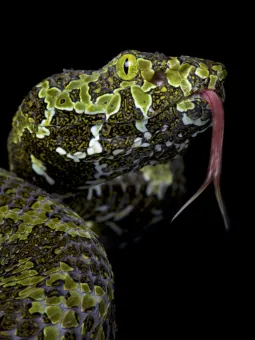
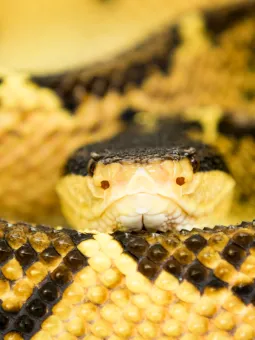
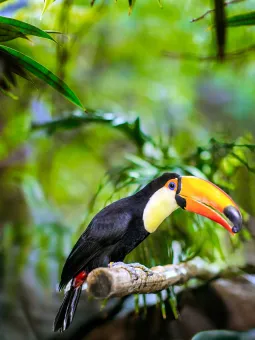
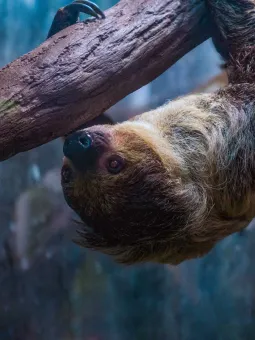
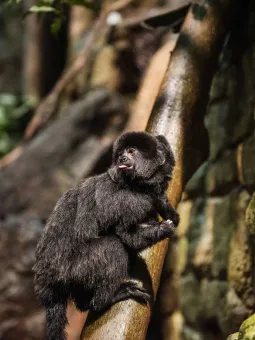
Universeum keeps several species of mammals, birds, reptiles, and fish that are part of conservation programs, either within the European zoo organization or the American zoo association. Here are some of them:
Field Projects to Protect Endangered Habitats.
More and more habitats are facing various threats. When conditions change, it can in the worst case lead to the disappearance of habitats and subsequently the species. Zoos and aquariums contribute to field projects run by other conservation actors in several ways. Partly through collecting substantial funds through entrance fees and donations. They can also provide expert knowledge, and sometimes even on-site workforce.
Universeum contributes financial resources and/or expertise to several field projects:
- Black-headed Bushmaster (Lachesis melanocephala)
-
Inventory of individual numbers (currently unknown how many black-headed bushmasters exist) and research. Run by IUCN Viper Specialist Group.
- Pied Tamarin (Saguinus bicolor)
-
Run by EAZA in collaboration with IUCN.
- Atlantic Sturgeon (Acipenser oxyrhinchus)
-
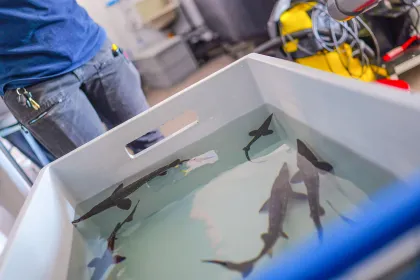
Universeum contributes to the Sturgeon Return project, which released 95 Atlantic sturgeons into the Göta River in summer 2024.
- Small-spotted Catshark (Scyliorhinus canicula)
-
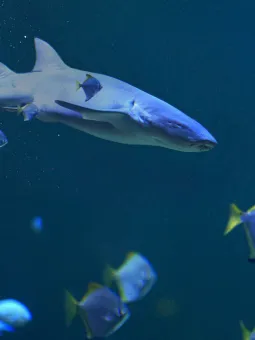
Universeum's marine biologists participate with expertise in the release of small-spotted catsharks. The project is run by WWF and Havets hus.
An important arena for biodiversity.
Scientists estimate that a large proportion of the world's animal and plant species are at risk of disappearing within this century. The main causes are human impact, such as habitat loss, overexploitation of natural resources, climate change and the spread of invasive species. In this situation, zoos have taken on an increasingly important role in the global work for biodiversity. A significant contribution is the conservation programs for endangered species that modern zoos participate in. Through encounters with live animals and educational activities, zoos also increase people's knowledge about animals, nature and the threats to biodiversity. In addition, research is conducted, which provides important knowledge about animal behavior, health and biology, which often cannot be collected in the wild and is central to conservation work. Research and conservation go hand in hand.

Knowledge to Protect Biodiversity.
If we humans are to stop destroying and overexploiting Earth's resources, we need knowledge. Knowledge about what we're doing wrong and knowledge about what we can do instead. Zoos and aquariums, like Universeum, are among the few places where we humans can experience animals and plants – including species not found wild in Sweden – and learn to be careful with the planet we live on.
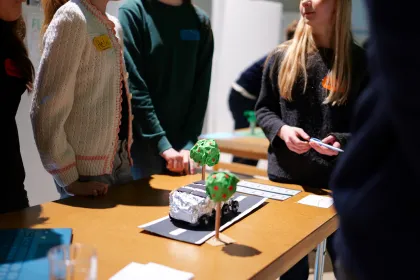
Spreading knowledge about biodiversity is, in addition to Universeum's conservation work, also constantly ongoing in our educational activities. Through interdisciplinary and experiential learning, where we connect our learning environments with our living environments, we strengthen children and adults' understanding of science, technology, mathematics – and biodiversity. Here are some examples.

Living learning environments.
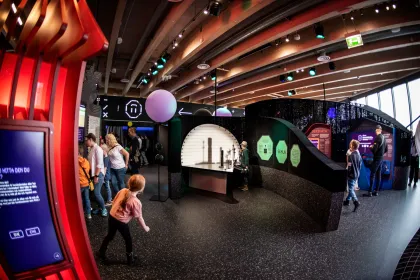
In our living learning environments such as the Wilderness and the Rainforest, biodiversity is a natural feature and creates a strong foundation for educational conversations. The environments create an understanding and increased knowledge about animals, plants and how humans have affected nature. Here we can use concrete examples in the discussion.

Sambio.
Since 2023, Universeum has participated in SamBio – a regional collaborative project with researchers and public actors to spread knowledge about biodiversity to schools, teachers and businesses. The project is a collaboration between researchers at the University of Gothenburg and a number of public actors in the region (museums, aquariums, botanical gardens, etc.).

GGBC.
Since its inception, Universeum has been a member of GGBC, the Gothenburg Center for Global Biodiversity Studies, which links researchers, decision-makers and the public on issues related to biodiversity and strives to expand and further develop research on biodiversity.
Latest News from the National Science Center of Sweden.